Capture what happened
Write down observations, decisions, progress, and next steps while the context is still fresh.
Keep investigative updates, staff-authored activity, case emails, and handoffs connected to the work they describe. Casewyze gives the team a shared operational record instead of scattering essential context across inboxes, texts, and memory.
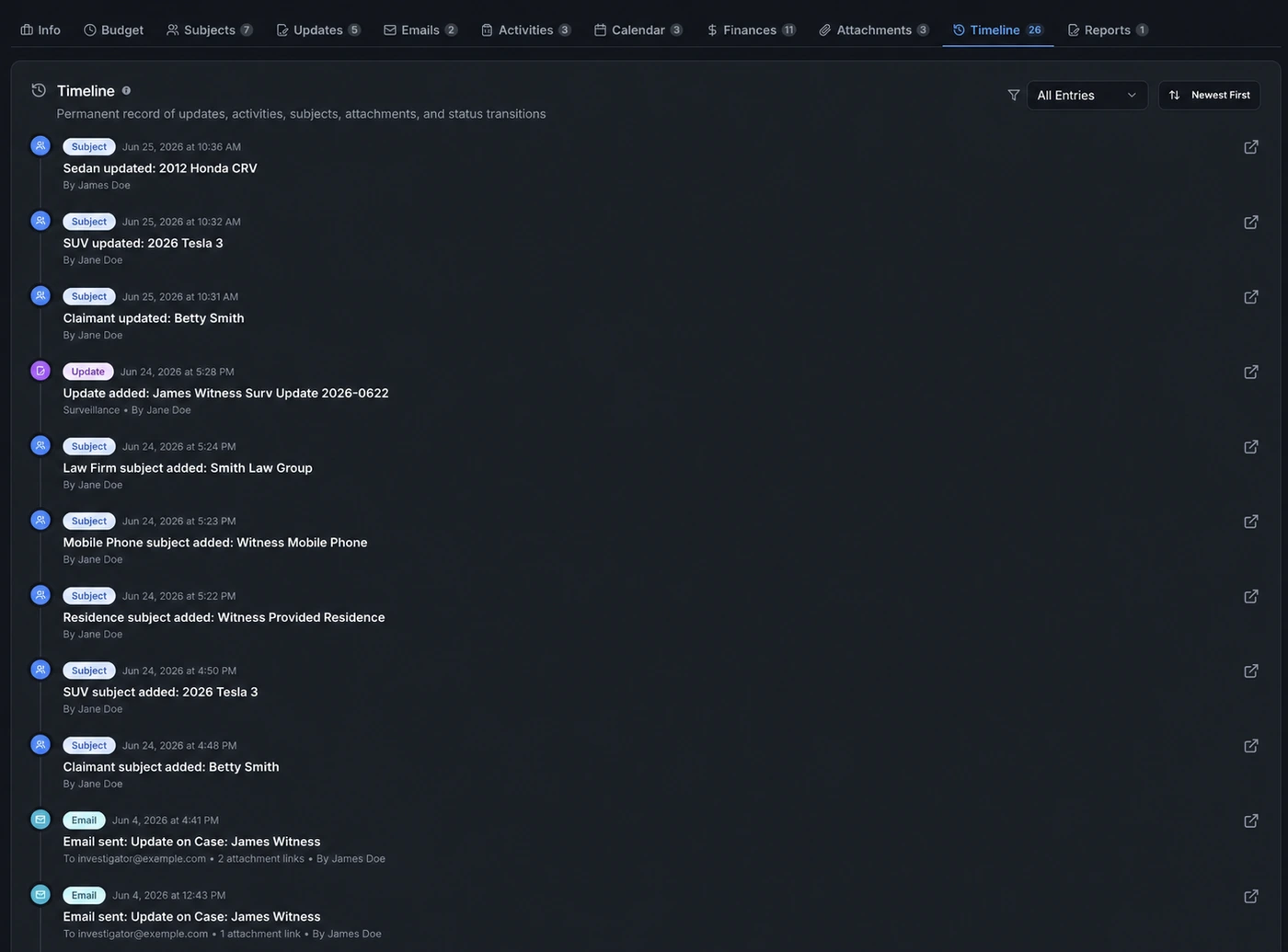
For a private investigation agency, staff updates are not general company announcements. They are operational records: an investigator documents surveillance, an administrator records a client instruction, a manager notes a review decision, or a vendor reports assignment progress. Each update is more useful when it stays connected to the relevant case.
Write down observations, decisions, progress, and next steps while the context is still fresh.
Relate updates to the case, activity, author, subject matter, and communication that explain the work.
Let authorized staff review meaningful case activity without reconstructing a timeline from separate tools.
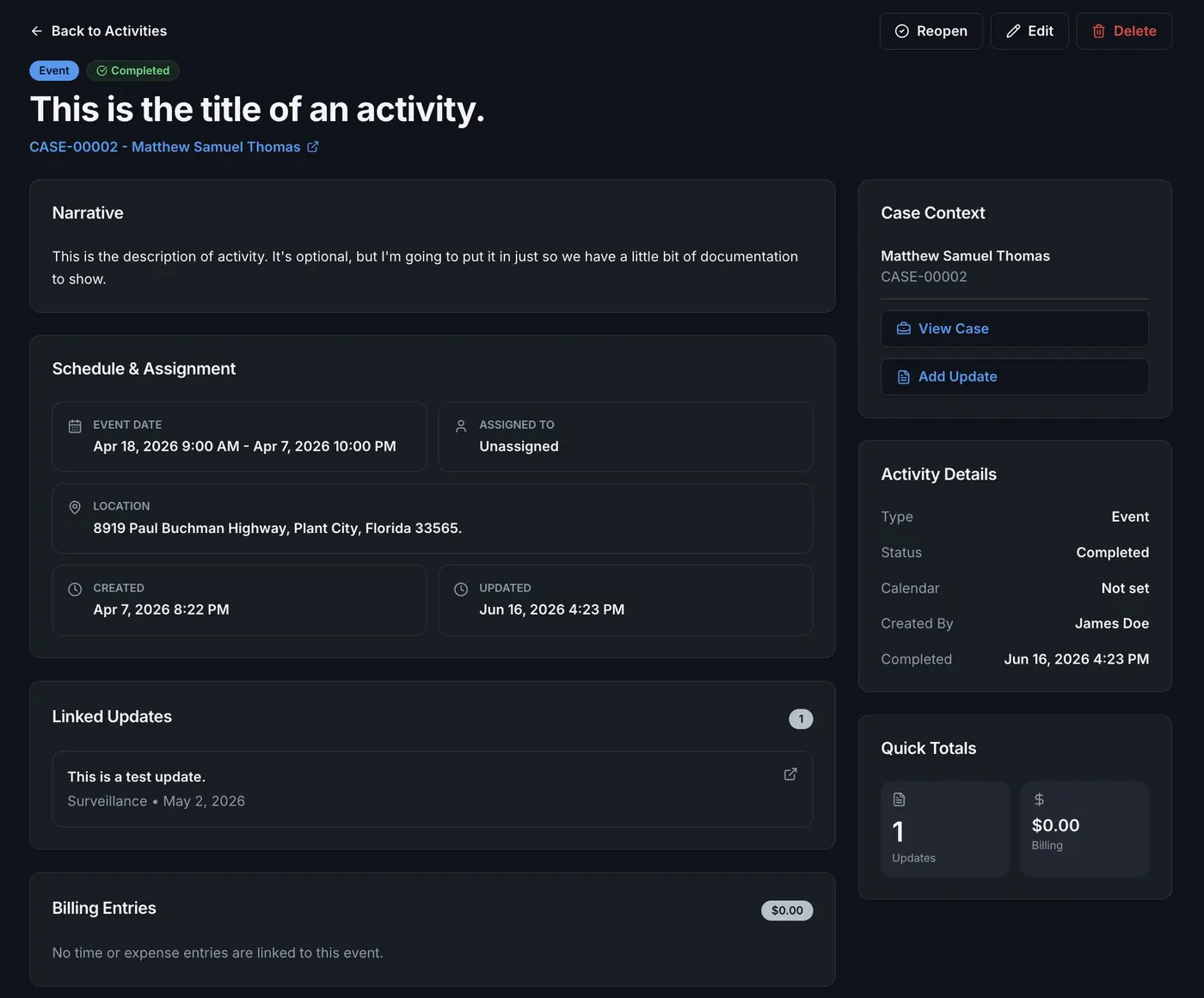
A surveillance event or investigative task produces more than a completion status. The agency may need the narrative, assigned investigator, dates, location, related update, and billing context. Casewyze keeps those pieces connected so the update reflects the work instead of becoming an isolated note.
That connection makes staff updates easier to interpret during manager review, reassignment, invoicing, and client follow-up.
When a case changes hands, the next investigator or manager should not have to ask which email contains the latest instruction or whether a subject detail was already confirmed. A shared timeline lets authorized staff review the sequence of updates, emails, activities, subject changes, attachments, and status transitions.
This does not replace investigator judgment. It gives that judgment a more complete record to work from.
Consistent updates are easier to search, review, and turn into client-ready communication. Agencies can adapt this checklist to their own policies, assignment types, and reporting standards.
Staff updates work best when the agency agrees on what belongs in the record and how that information should support the next step.
They are case-connected records of investigative activity, observations, decisions, handoffs, and communications recorded by investigators, administrators, vendors, or managers.
A status change marks the case’s current stage. A staff update records the operational context behind the work, including what happened, who recorded it, and how it relates to activities or communications.
Yes. A complete internal record makes it easier for authorized team members to prepare accurate client communications without reconstructing the case from email and memory.
Connecting updates to the case preserves context, supports cleaner handoffs, and makes activity easier to review alongside subjects, emails, attachments, and timeline events.
See how Casewyze connects investigators, activities, updates, subjects, communications, and finances around the case.
Prepare reusable tasks and materials with the Resource Library, then use CW Connect to take and review recorded statements inside the case.